
How to Choose the Right Anti-Seize (and Why it Matters)
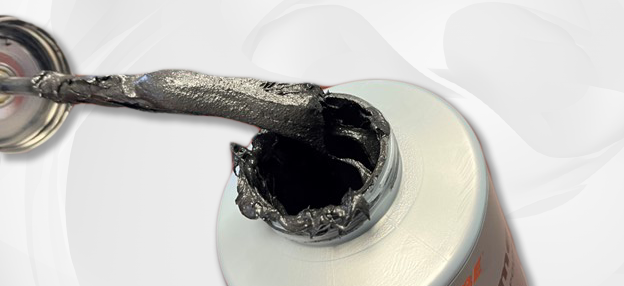
For decades, Jet-Lube has developed and delivered high-quality, high-performance anti-seizes—trusted by industries around the world to protect threaded connections and keep equipment running reliably.
Whether you’re working in industrial, manufacturing, oil & gas, mining, or a wide range of other industries, knowing why anti-seizes matter and how to choose the right one can save you from costly downtime.
_____________________________________________________________________________
What Anti-Seizes Do
Anti-seizes are similar to grease, but with a thicker, paste-like consistency. This is thanks to additional thickeners and fillers—either metallic or non-metallic—that create a durable, wear-resistant barrier between the surfaces of fasteners and metallic components.
Their primary job? Prevent threaded fasteners from seizing and sticking together so they can be loosened easily and removed in the future. Anti-Seizes prevent:
- Galling of fasteners threads and surfaces
- Oxidation and rust between threads
- Galvanic corrosion between chemically active metals
Anti-Seizes also act as a thread lubricant, reducing the amount of torque needed to properly tighten fasteners. For critical fasteners, always check the proper Nut Factor with your anti-seize manufacturer, then recalculate torque.
_____________________________________________________________________________
Key Factors in Selecting an Anti-Seize
The biggest difference between anti-seize products is the type of solid additives used.
Metallic solids include metallic particles made of aluminum, copper, nickel, and zinc.
Non-metallic solids include graphite, molybdenum disulfide, some boron and calcium-based solids.
When choosing an anti-seize, consider:
- Fastener operating temperature – Some solids perform better at higher temperatures.
- Fastener and machine components metallurgy compatibility – Certain dissimilar metals can react with each other.
- Anti-Seize chemical exposure – Ensure compatibility with any process chemicals.
- Regulatory, chemical or material restrictions – Some metals are restricted for environmental or safety regulations.
_____________________________________________________________________________
Common Types of Anti-Seizes
General Purpose – Example: Jet-Lube Silver Plus Regular
- Contains aluminum or zinc, sometimes copper and graphite
- Great for most steel and aluminum fasteners, up to at least 1,000°F (538°C)
- Affordable and widely available
Copper-Based – Example: Jet-Lube Kopr-Kote Anti-Seize
- Fortified with copper, often with graphite
- Suitable for most steel and copper-alloy fasteners, up to ~1,800°F (982°C)
- Higher electrical conductivity—useful in specific applications
Nickel-Based – Example: Jet-Lube Nikal
- Fortified with nickel, free of other metals and graphite
- Highest temperature rating: up to ~2,400°F (1,315°C)
- Chemically inert with very low reactivity—suitable for most consumer and industrial applications
- Usually the most expensive metallic option
Non-Metallic – Example: Jet-Lube 550 Extreme
- No metallic solids—ideal where metal contamination or restrictions apply
- Good high-temperature performance
- Lower galling and extreme pressure protection than metallic types
_____________________________________________________________________________
The Bottom Line
Choosing the right anti-seize improves efficiency, reduces maintenance costs, and keeps your equipment running and lasting longer.
Jet-Lube offers a full range of anti-seizes tailored to your specific application, environment, and operating conditions.
Featured Anti-Seizes:
- Silver Plus Regular (Aluminum-Based)
- Kopr-Kote Anti-Seize (Copper-Based)
- Nikal (Nickel-Based)
- 550 Extreme (Non-Metallic)
_____________________________________________________________________________
About the Author
Christopher Barker is a recognized expert in heavy-industry lubrication and anti-seize technology, with a strong commitment to helping organizations improve reliability and operational performance worldwide.
_____________________________________________________________________________
Article Reproduction Notice
Reproduction Disclaimer
IE Boat Supplies has reproduced this article and does not assume any responsibility for its content.
Acknowledgments
IE Boat Supplies would like to thank the author, Christopher Baker, for his contribution.